
THIS TIME ON CODE WACK!
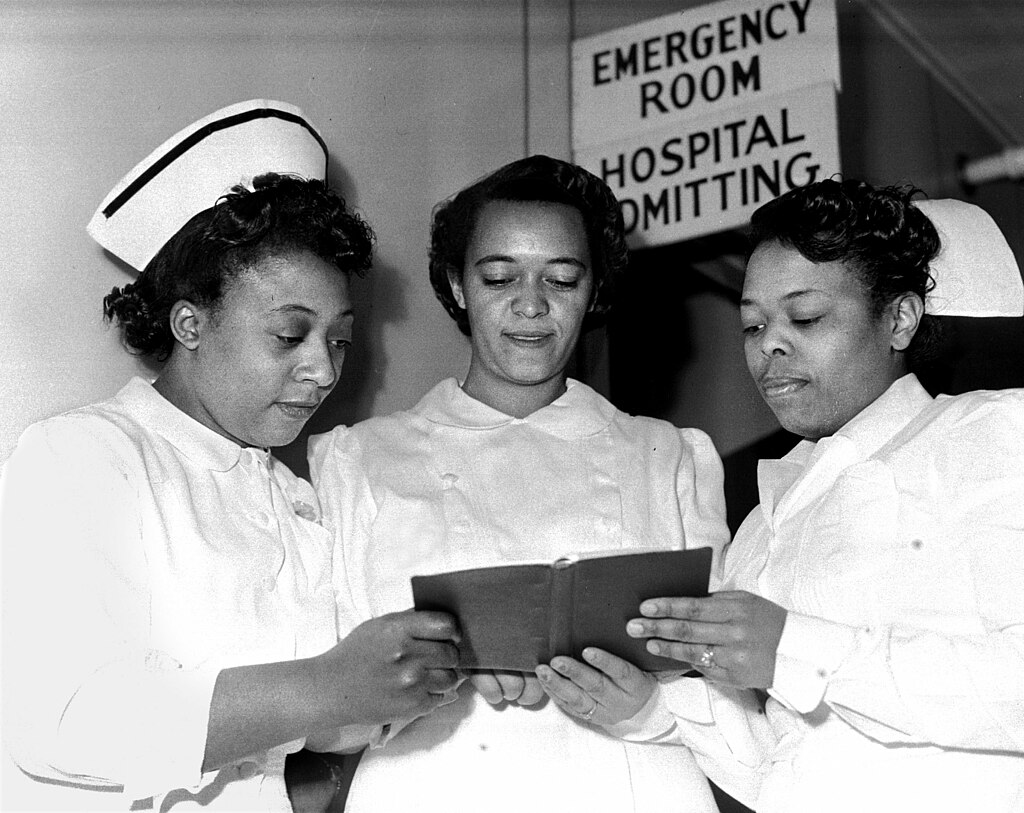
In honor of Dr. Martin Luther King, Jr. Day, we’re rebroadcasting our Anthem Award–winning episode on one of the most overlooked civil rights battles in American history: the desegregation of hospitals.
The episode features Dr. Barbara Berney, a distinguished public health scholar and the creator of the award-winning documentary Power to Heal: Medicare and the Civil Rights Revolution. Together, we explore how federal Medicare dollars were used as a powerful tool to force hospitals to integrate in the 1960s.
We’re uplifting this groundbreaking story to educate a new generation about the critical role health care played in the civil rights movement—and to confront how racism still shapes access to care and health outcomes today.
This is part one of a two-part series.
Check out the Transcript and Show Notes for more!
And please keep Code WACK! on the air with a tax-deductible donation at heal-ca.org/donate.
SHOW NOTES
WE DISCUSS
What did segregated medical care – a brutal reality for Black Americans – look like on the ground?
“There were a lot of hospitals, especially where Black people were simply not admitted. They were just sent away, or they wouldn’t even go because they knew that you couldn’t go – that was a white hospital, and you weren’t going to be admitted there. And there are examples of this in the movie. Toni Daniels was not admitted to the first two hospitals that she went to. She had polio. [Hospitals] were just not admitting Black people.
“… People were sent long distances and often died on the way to the hospital because there wasn’t a Black hospital close to them, even if they were very sick or had been in really terrible accidents.
“… One example in the film is that patients who were in Yazoo City, which was a city in Mississippi, were sent to Jackson [Mississippi] because they couldn’t be admitted to the hospital in Yazoo City because that was a White hospital and they were simply not admitting Blacks and they had to go to Jackson, and if they couldn’t make it to Jackson, then they would die on the way.” – Barbara Berney, PhD, MPH
What about segregation in the North, in cities like Boston, Philadelphia, and Chicago? There were racial quotas in many hospitals, right?
“Yes. … For example, in Chicago, the University of Chicago had a quota. One of the people in the movie was a physician at the University of Chicago, and he pointed out that once they met their quota of 10%, that no matter what was wrong with you, if you were Black, you went to Cook County Hospital and there were lots of examples like that in northern hospitals.” – Barbara Berney, PhD, MPH
Let’s talk about when Medicare was passed in the 1960’s, did the American Medical Association support it?
“… at the time when Medicare was passed … Black doctors and the National Medical Association – the association that basically represented Black doctors and nurses … were the only doctors by and large who supported Medicare. And they wanted hospitals to be desegregated in return for their support for the Medicare legislation.
“And Lyndon Johnson had a Secretary of Health Education and Welfare, John Gardner, who was also in favor of desegregation, and it was really important both to the National Medical Association and to Gardner and the people that he hired – that hospitals be desegregated as a condition of them getting Medicare money and they managed to set it up so that you have to be certified first. And one of the conditions of certification was that you be desegregated.
So hospitals were able to say that they had to desegregate, and they did have to desegregate in order to get Medicare money. And they had to get Medicare money because for many hospitals, that was going to be like half of their income was to be Medicare money. If you weren’t certified as desegregated and otherwise eligible for Medicare funds, the hospital had to go to court, and if you were not desegregated, then you probably were never going to get funds. This was something that was pretty hard to lie about.” – Barbara Berney, PhD, MPH
Helpful Links
Power to Heal: Medicare and the Civil Rights Revolution (2018), Trailer
How Social Security Helped Desegregate America’s Hospitals, Social Security Matters
The Forgotten Role of Medicare in Desegregating US Healthcare, United Electrical, Radio and Machine Workers of America.
The Black Hospital Movement (1865 – 1960’s), Duke University Medical Center
Public Health, Racism, and the Lasting Impact of Hospital Segregation, Public Health Reports, SAGE Publications
Key Data on Health and Health Care by Race and Ethnicity, KFF
Episode Transcript
Read the full episode transcript.
Guest Biographies: Barbara Berney, PhD, MPH
Dr. Barbara Berney, Project Creator, Producer of Power to Heal: Medicare and the Civil Rights Revolution, is Emeritus Associate Professor at City University of New York School of Public Health and a distinguished scholar in public health, environmental justice, and the U.S. healthcare system.
She taught health policy analysis, the US healthcare system, and documentary production for public health practitioners in the CUNY School of Public Health. She holds an MPH in Health Administration from UCLA and a PhD in Health Policy from Boston University, where she was a Pew Scholar.
Her diverse experience includes working as a frontline health worker in South Los Angeles, a policy analyst with the United Mine Workers Health and Retirement Funds, and with the Bureau of Health Professions in the Department of Health and Human Services. She was recruited to be the Director of an OSHA-funded Occupational Health Education Center that provided occupational health education to women and minority workers. She served as staff to the White House Advisory Committee on Human Radiation Experiments and for the Environmental League of Massachusetts, where she was one of the people responsible for getting requirements for green schools into Massachusetts legislation.
Get Involved / Take Action
Love Code WACK!? Keep us on the air with a tax-deductible donation!
Subscribe to catch all Code WACK! episodes
Subscribe to HEAL California for our Weekly News Roundup with a California twist
Join Healthy California Now – a coalition working toward a California single-payer system. Individual and organizational memberships available.




You can also find us on ProgressiveVoices.com and NurseTalk Media.
This podcast is powered by HEAL California,
uplifting the voices of those fighting for healthcare justice.
____________________________________________________________________________
HEAL California is an independent news and information hub focused on the Medicare for All movement. We highlight the ongoing injustices of our broken healthcare system and amplify the voices of those who are most impacted by it, with non-partisan news, views, podcasts, and videos,
Our Podcasts shine a light on the failures of America’s healthcare system and explains how Medicare for All could help.
Our Media page offers connections to experts and additional resources, including links to legislation and studies.
Keep up with the Medicare for All movement!
Follow us on Facebook, Bluesky, and Instagram.
Subscribe for email updates, action alerts and more!