

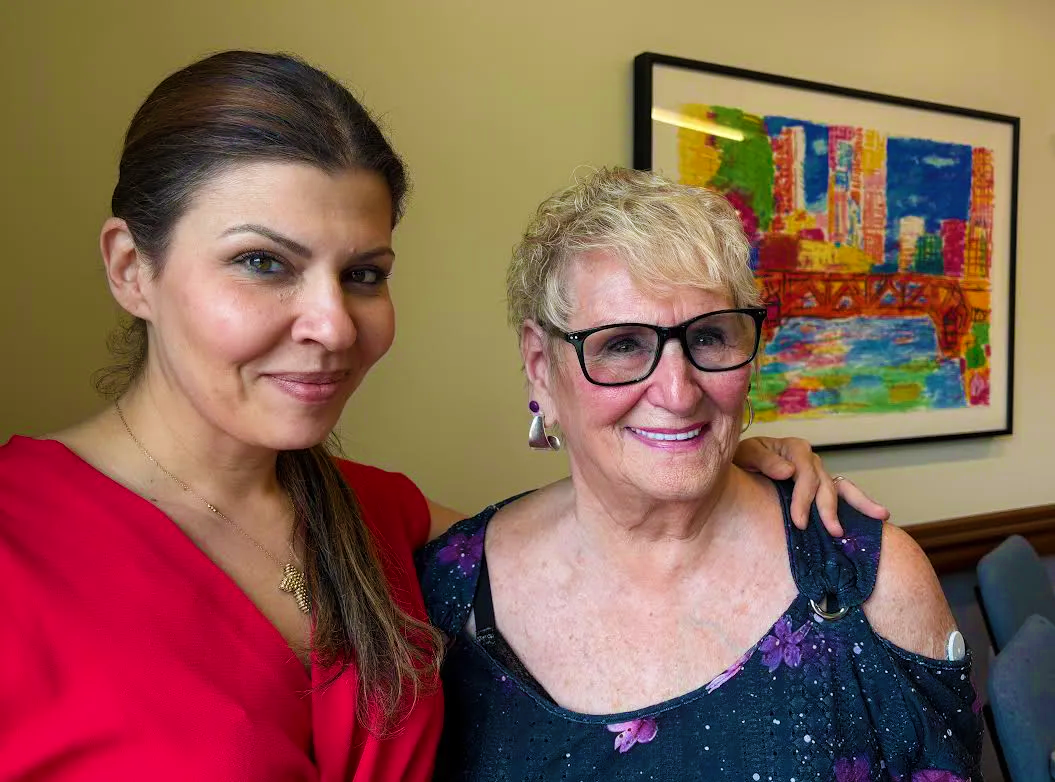
“At age 82, Roberta Rabinovitz realized she had no place to go. A widow, she had lost both her daughters to cancer, after living with one and then the other, nursing them until their deaths. Then she moved in with her brother in Florida, until he also died.”
Health Care Groups Aim To Counter Growing ‘National Scandal’ of Elder Homelessness
And so last fall, while recovering from lung cancer, Rabinovitz ended up at her grandson’s home in Burrillville, Rhode Island, where she slept on the couch and struggled to navigate the steep staircase to the shower. That wasn’t sustainable, and with apartment rents out of reach, Rabinovitz joined the growing population of older Americans unsure of where to lay their heads at night.
But Rabinovitz was fortunate. She found a place to live, through what might seem an unlikely source — a health care nonprofit, the PACE Organization of Rhode Island. Around the country, arranging for housing is a relatively new and growing challenge for such PACE groups, which are funded through Medicaid and Medicare. PACE stands for a Program of All-Inclusive Care for the Elderly, and the organizations aim to keep frail, older people in their homes. But a patient can’t stay at home if they don’t have one.
As housing costs rise, organizations responsible for people’s medical care are realizing that to ensure their clients have a place to live, they must venture outside their lanes. Even hospitals — in Denver, New Orleans, New York City, and elsewhere — have started investing in housing, recognizing that health isn’t possible without it.
And among older adults, the need is especially growing. In the U.S., 1 in 5 people who were homeless in 2024 were 55 or older, with the total older homeless population up 6% from the previous year. Dennis Culhane, a University of Pennsylvania professor who specializes in homelessness and housing policy, calculated that the number of men older than 60 living in shelters roughly tripled from 2000 to 2020.
“It’s a national scandal, really, that the richest country in the world would have destitute elderly and disabled people,” Culhane said.
Over decades of research, Culhane has documented the plight of people born between 1955 and 1965 who came of age during recessions and never got an economic foothold. Many in this group endured intermittent homelessness throughout their lives, and now their troubles are compounded by aging.
But other homeless older adults are new to the experience. Many teeter on the edge of poverty, said Sandy Markwood, CEO of USAging, a national association representing what are known as area agencies on aging. A single incident can tip them into homelessness — the death of a spouse, job loss, a rent increase, an injury or illness. If cognitive decline starts, an older person may forget to pay their mortgage. Even those with paid-off houses often can’t afford rising property taxes and upkeep.
“No one imagines anybody living on the street at 75 or 80,” Markwood said. “But they are.”
Rabinovitz had worked as a senior credit analyst for a health care company, but now her only income is her Social Security check. She keeps $120 from that check for personal supplies, and the rest goes to rent, which includes meals.
Once a week or so, Rabinovitz rides a PACE van to the organization’s center, where she gets medical care, including dental work, physical therapy, and medication — always, she said, from “incredibly loving people.” When she’s not feeling well enough to make the trek, PACE sends someone to her. Recently, a technician with a portable X-ray machine scanned her sore hip as she lay in her own bed in her new studio apartment.
“It’s tiny, but I love it,” she said of the apartment, which she’s decorated in purple, her favorite color.
This story also ran on NPR.
KFF Health News is a national newsroom that produces in-depth journalism about health issues and is one of the core operating programs at KFF — the independent source for health policy research, polling, and journalism.
______________________________
HEAL California is an independent news and information hub focused on the Medicare for All movement.
With non-partisan news, views, podcasts and videos, we highlight the on-going injustices of our broken healthcare system and amplify the voices of those who are most impacted by it.
Our Podcasts shine a light on the failures of America’s healthcare system, while explaining how Medicare for All could help.
Our Media page offers connections to experts and additional resources including links to legislation and studies.
Keep up with the Medicare for All movement!
Follow us on Facebook and subscribe for email updates.