

“Sen. John Kennedy of Louisiana is taking aim at California’s Medicaid program for providing housing assistance, food, and other social services to high-need, low-income patients who tend to rack up big healthcare costs and, he argued, strain taxpayer funds.”
The Republican blasted California during back-to-back political attacks in May, saying the heavily Democratic state is committing “outrageous fraud” and “stealing” by spending state and federal Medicaid money meant for basic medical treatment on unconventional services such as housing and nutrition assistance, gym memberships, and even tribal prayers and, he claimed, exorcisms.
“The California Medicaid program will pay for herbal medicines, meal deliveries. They’ll pay for housing,” Kennedy said. “I don’t know what housing has to do with healthcare.”
“California, they’re just setting all kind of records,” he added. “They’re wild people.”
Despite criticism from congressional Republicans and growing scrutiny from the Trump administration, Gov. Gavin Newsom, a Democrat considering a presidential run, said he’s proud of California’s spending on social services in Medi-Cal, the state’s Medicaid program. It’s a multibillion-dollar experiment to help medically frail patients meet their housing, food, and other social needs that Newsom says is not only legal but also a more cost-effective and evidence-backed approach to providing healthcare for Californians with complex health conditions. He counters that investing in services outside clinical settings can help people avoid emergency rooms and hospital admissions, improve their long-term health, and ultimately save taxpayers money.
“It’s about whole-person care,” Newsom said, adding that he hopes President Donald Trump’s administration sees California’s leadership and agrees with the “reforms we’re advancing as national best practices.”
Now one of the governor’s marquee health initiatives is at the center of an intensifying partisan battle with Republicans in Washington, D.C., who have moved to rein in billions in healthcare spending on low-income and disabled people across red and blue states. It’s a philosophical divide: Conservatives say social services are a financial strain on Medicaid and shouldn’t be considered healthcare, while liberals argue that investing in prevention ultimately saves money. While experiments proliferated across the country under President Joe Biden, the Trump administration has rescinded federal policy encouraging state Medicaid programs to address health-related social needs.
The Medicaid fight is putting patients in limbo.
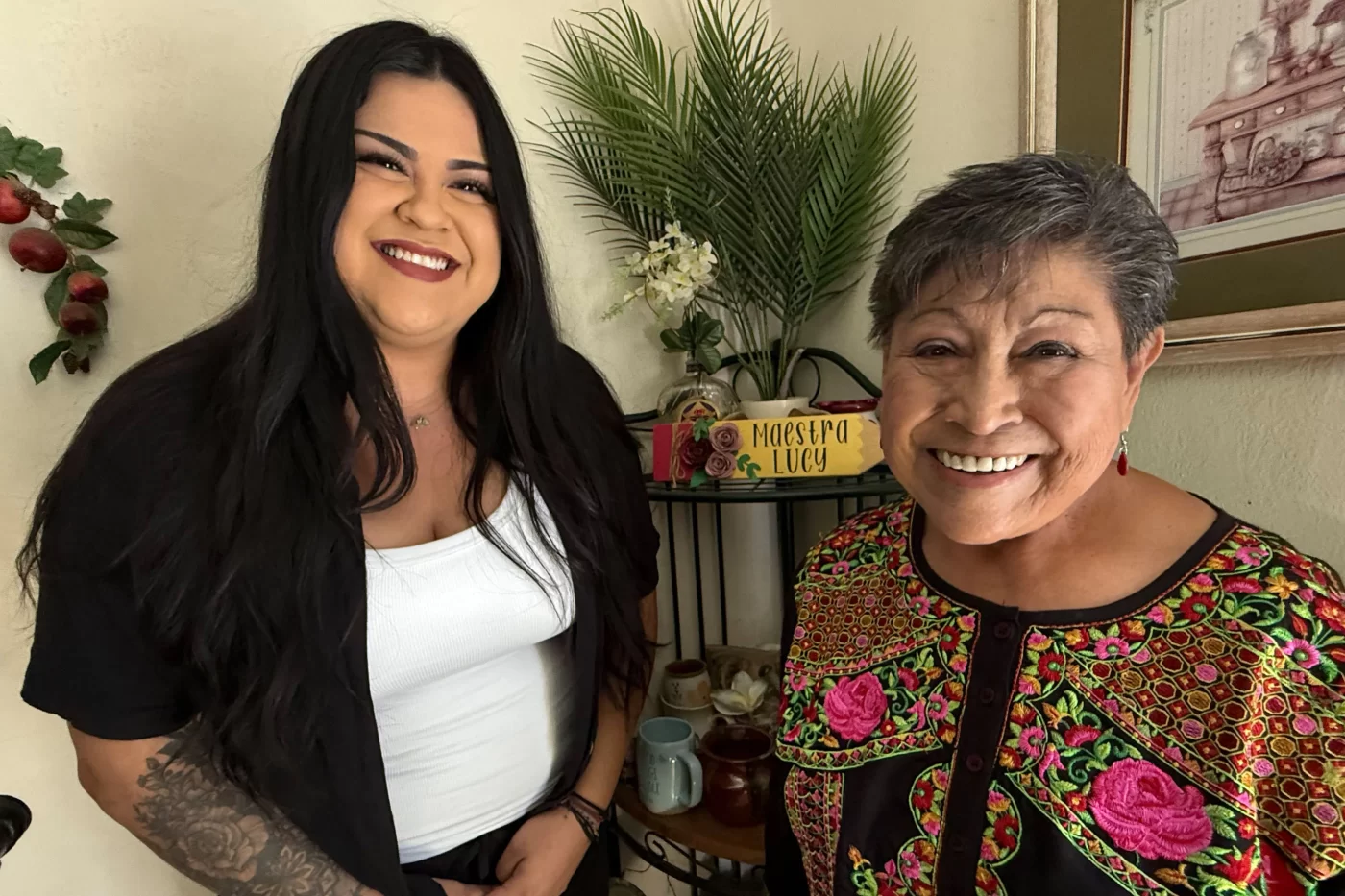
Lucy Rodriguez teaches Mexican folk dancing in the town of Hollister, in California’s Central Coast region. She said her life turned around this year once an intensive case manager with Titanium Healthcare, which contracts with health insurers to provide services, began helping her manage her chronic diseases and stay on top of her medical appointments and prescriptions, even picking up free food boxes for her. The 73-year-old is on Medicare and Medi-Cal, which offers more extensive benefits. The low-income health program has helped pay her utility bills, and she was recently approved for home-delivered meals.
“This has been a godsend,” said Rodriguez, who has diabetes, high blood pressure, and kidney disease. “I was getting so stressed out and depressed. It’s really hard when you’re on a fixed income. Groceries are so expensive, and with summer, electricity gets even more expensive. But this is really improving my life.”
She worries the Trump administration will cut benefits to low-income older people.
Last year, the Centers for Medicare & Medicaid Services warned states that federal funding for social services would be determined on a case-by-case basis. CMS spokesperson Christopher Krepich said the agency is not ending current agreements, known as waivers, that grant states temporary permission to provide social services, which are paid for with state and federal dollars. But future applications, for new services or to extend existing initiatives, could be at risk if they veer too far from traditional healthcare.
“Moving forward, CMS will work with states on innovative waivers that address core healthcare needs, as consistent with evidence-based approaches tied to clinical diagnoses and services, to the goal of ultimately improving health outcomes in the Medicaid population,” Krepich said in a statement.
In a further escalation, the Justice Department put out a recent memo allowing states to institutionalize people with disabilities and severe mental illness instead of providing community-based care. Republicans have also targeted states, mostly blue ones, for what they say is a failure to go after waste, fraud, and abuse in Medicaid. In May, CMS Administrator Mehmet Oz stood alongside JD Vance as the vice president announced the deferral of $1.3 billion in Medicaid money to California over suspicions of fraud.
California Attorney General Rob Bonta said Republicans are simply trying to score political points while ignoring the healthcare needs of poor people. “The federal government wants to politicize fraud,” Bonta said, “and use it, unfortunately, as a bludgeon and a cajole to beat up on blue states.”
Social Healthcare
Health policy researchers say roughly 80% of health outcomes are linked to socioeconomic, environmental, and behavioral factors, such as housing instability, homelessness, food insecurity, and exposure to violence, whereas 20% is associated with medical care delivered in hospitals and clinics. That evidence fueled the Biden administration’s efforts to tackle social services.
At least 24 states use their own money while drawing federal Medicaid funds for social healthcare experiments. Colorado, Massachusetts, New York, North Carolina, Oregon, and Pennsylvania are among those that provide housing and nutrition assistance.
As the Trump administration pulls back on social services, states are rethinking how to fund benefits that have improved preventive care for low-income people. Some have launched new benefits under what’s known as a state plan amendment, a mechanism states use to modify their Medicaid programs that doesn’t need federal waiver approval. Michigan and Minnesota, for example, use this to add recuperative care for homeless patients after hospitalization. These short-term care facilities offer people the opportunity to recover, bridging the gap between hospital discharge and independent living.
This approach “has the advantage of establishing a permanent, statewide benefit that does not require ongoing federal renewals, offering greater stability and predictability,” said Lynn Sutfin, a spokesperson for the Michigan Department of Health and Human Services.
Other states, meanwhile, rely on federal waivers, which require renewal every five years, to provide social services. Arizona officials said the state intends to submit a request by the end of September to continue its program to provide housing and other services to homeless patients, or those at risk of homelessness, with a serious mental illness and a chronic health condition or recent incarceration.
“When members have access to stable housing and supportive services, they are more likely to engage in ongoing care and less likely to experience avoidable emergency department visits and inpatient admissions,” said Roberta Harrison, interim director of the Arizona Health Care Cost Containment System.
California, which has been the most aggressive state in adopting social services, has taken a two-pronged approach to keep its vast offerings funded past this year. The state is using its authority to make most of its existing social services and benefits permanent in Medi-Cal managed-care coverage. That regulatory maneuver bypasses federal waiver approval — a move that could attract further Republican scrutiny.
But not everything the state offers can be funded without permission from the federal government. As some services are made permanent, the Newsom administration is seeking new waivers to continue other social services, while also adding more.
It’s an ambitious approach that would expand California’s social healthcare experiment. Newsom said he’s worried that the federal government will decline the latest waiver request. “How could you not be with this administration?” he said. “I’m always concerned.”
New Front in Healthcare
California offers most of its health-related social services under Biden-era waivers within Medi-Cal, which has a proposed budget of $217 billion. Although there are more than 14 million residents on Medi-Cal, the state has been selective about who gets help from 15 types of social services in its program, called California Advancing and Innovating Medi-Cal, or CalAIM. Patients with complex needs can also receive help navigating their health and social needs from specialized social workers under a benefit known as enhanced care management.
Since 2022, California has been offering social services, spending nearly $12 billion in joint state and federal money, with the hope of reducing long-term Medi-Cal spending by keeping enrollees out of costly institutions including emergency rooms, jails, nursing homes, and mental health crisis centers.
CalAIM had provided social services to more than 528,000 patients as of September 2025, the most recent state data available. And nearly 453,000 low-income Californians have received intensive case management. Some patients receive both services.
Among the services California is making permanent: Homeless patients can get help finding an apartment, with Medi-Cal paying rental security deposits and six months of rent. Patients with chronic conditions such as diabetes and heart disease are eligible for home-delivered meals. Asthmatic patients can get mold removed from their homes to control flare-ups. Low-income seniors with disabilities can get a wheelchair ramp installed free of charge. And inmates leaving jail or prison can be connected immediately with primary care, mental health, and substance use treatment.
The social services — especially housing, food assistance, and home modifications — are already demonstrating success in stabilizing the health of the most complex patients, while achieving savings for Medi-Cal through reductions in emergency room visits and hospitalizations and less reliance on institutional care such as nursing homes, according to the state Department of Health Care Services.
In the Central Valley, for instance, Health Plan of San Joaquin CEO Lizeth Granados said CalAIM has helped place homeless patients who were routinely hospitalized into housing. And patients with uncontrolled diabetes saw their blood sugar drop after receiving nutrition counseling and home-delivered meals.
Overall, Granados said, the health plan has seen major improvements in chronic disease management and reductions in hospital stays, dropping to 44 inpatient hospitalizations per 1,000 members since it launched in 2022, down from 61 per 1,000 before CalAIM.
In Orange County, officials with CalOptima Health credited CalAIM housing services for contributing to a nearly 27% drop in unsheltered homelessness. “We’ve been able to expand our street medicine programs, too,” said Yunkyung Kim, the insurer’s chief operating officer.
Around the state, Medi-Cal health insurers said they’re optimistic that CalAIM will continue to save money and improve patient health. Yet, the fate of some services will be decided by the Trump administration.
California has asked CMS to continue enrolling jail and prison inmates in Medi-Cal 90 days before their release to maintain consistent treatment for substance use, mental disorders, or physical conditions, a CalAIM service still in its early stages.
The state has also proposed a new job assistance benefit that counties could opt into to help patients find and retain work in response to upcoming federal work requirements imposed by congressional Republicans’ One Big Beautiful Bill Act, signed by Trump last summer.
And the state wants to continue its array of traditional healers and natural helpers for Californians with tribal affiliations, including music therapy, dancing, drumming, and referrals to sweat lodges for mental health treatment and substance use recovery. While it covers spiritual services, such as ceremonies, rituals, and herbal remedies, state officials said Medi-Cal does not cover exorcisms.
Already, the Trump administration’s positioning has forced the state to eliminate room-and-board benefits, which is threatening local efforts to provide recovery beds.
The state is cutting short-term post-hospitalization housing, which was meant to prevent hospitals from dumping homeless patients or those at risk of homelessness onto the streets. The CalAIM service providing up to six months of temporary housing and ongoing care is ending at the close of this year. And the state is cutting recuperative care benefits, no longer paying for beds for patients to recover from illness or injury, instead offering only wraparound services.
In San Francisco, these beds have been crucial in reducing overdose deaths, helping transition homeless people off the streets and into housing, and reducing hospital bed usage, said Neal Sheran, a medical director with the city’s Department of Public Health. The city’s health plan operates a sobering center, and recuperative care facilities where patients can recover from hospitalizations.
“We’re concerned,” Sheran said. “Funding for the overnight piece of these programs is really crucial to their success.”
Cuts on the Horizon
Even without federal threats, state budget pressures have strained CalAIM financing. Newsom has proposed reducing funding for social services by $68.3 million this fiscal year. The cut will deepen next year and remain at $150.2 million per year beginning in 2028.
Providers worry that Medi-Cal patients will lose access. And services, such as home-delivered meals and housing assistance, will be further restricted.
“It’s moving us back to the old days where our healthcare system is more expensive and reactive, instead of investing in prevention,” said Anwar Zoueihid, a vice president and the chief strategy officer at the Los Angeles-based Partners in Care Foundation, a CalAIM provider. “It’s contradictory to Make America Healthy Again.”
To save money, the state is tightening eligibility to limit services and reduce inappropriate use. For instance, Medi-Cal patients with food insecurity would no longer be eligible for home-delivered healthy meals without a qualifying condition like diabetes. And a homeless patient would get capped at six months for help finding an apartment.
Some of the biggest providers of CalAIM say services should be continuously evaluated and curtailed if health plans were too permissive. In some cases, food and housing services were given to low-income patients who didn’t necessarily qualify as the highest-need.
“It’s important everybody takes a look with a very sober view at whether we’re truly benefiting people so we’re spending money in the right places,” said Charlie Robinson, the chief health equity officer at L.A. Care, one of the state’s largest Medi-Cal health insurers.
Dorothy Seleski, the Medi-Cal president for Health Net, said the health insurer isn’t deterred by state and federal cuts.
“Regardless of what happens at the federal level, we are committed,” she said. “This is a significant transformation of the healthcare system, and we are already seeing major reductions in avoidable emergency room trips, avoidable hospital admissions, and we’ve closed gaps in preventive care.”
KFF Health News is a national newsroom that produces in-depth journalism about health issues and is one of the core operating programs at KFF — the independent source for health policy research, polling, and journalism.
______________________________
HEAL California is an independent news and information hub focused on the Medicare for All movement.
With non-partisan news, views, podcasts and videos, we highlight the on-going injustices of our broken healthcare system and amplify the voices of those who are most impacted by it.
Our Podcasts shine a light on the failures of America’s healthcare system, while explaining how Medicare for All could help.
Our Media page offers connections to experts and additional resources including links to legislation and studies.
Keep up with the Medicare for All movement!
Follow us on Facebook and subscribe for email updates.